《地上》 on the land
“The Land” refers to the ground on which people actually live. Invited into the daily lives of Towada’s residents through extended interviews, tsu-tsu attempts to open a passage between performance and reality — one through which the lived texture of a place might become newly perceptible.
--------- I will stay in Towada for the two months of the exhibition and act as a citizen. The process of performing will be made public.
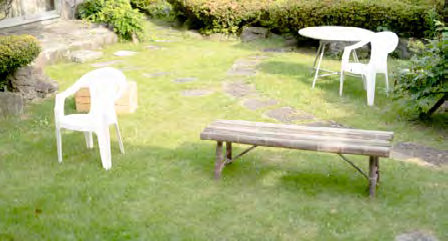
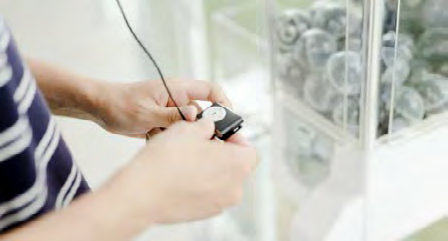
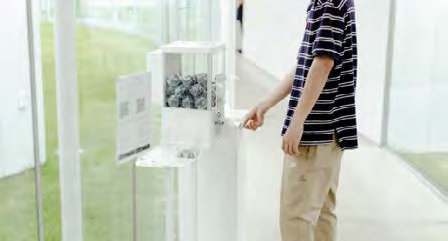
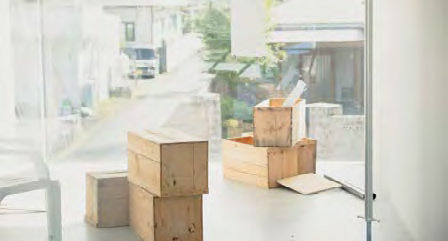
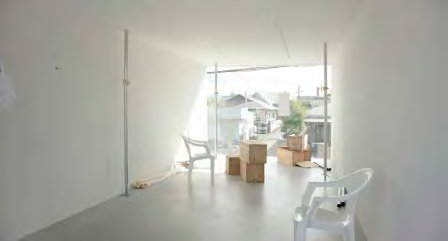
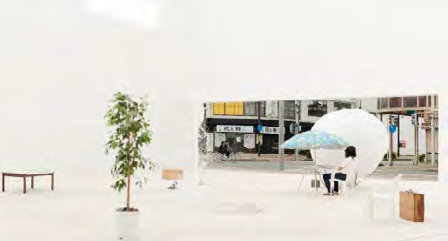
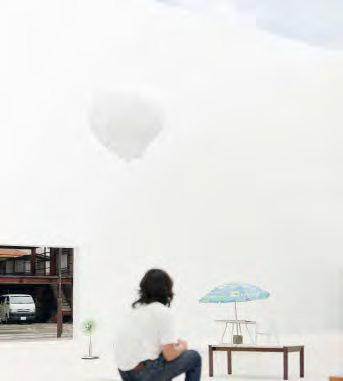
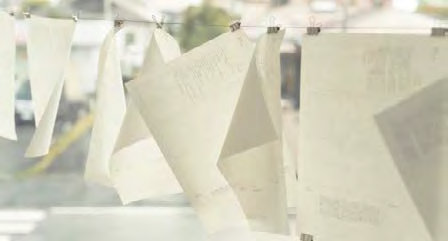
The exhibition followed a daily structure. Each morning, except on the museum’s Monday closures, I sat in the museum café from 10:00 to 12:00. After lunch, from 13:00 to 16:00, I repeated public rehearsals in a private house adjacent to the satellite venue “space.” Materials gathered through encounters over the two months — fragments of conversation, gesture, rhythm — accumulated in the exhibition room and were continually updated. In the final week, this accumulation was output through my body in a live performance. Visitors accessed the work through an audio guide received at the museum, the rehearsals, and the installation at “space.”
With this exhibition, I wanted to confront a structural asymmetry. Tourists arrive and seek to absorb as much as possible in a short visit. But the subjectivity of the 60,000 people who live here is also directed at you. Towada Art Center was built using financial resources granted in exchange for the presence of nuclear fuel cycle facilities. If the works presented in a museum built on that bargain are aimed only at visitors from outside, the town itself — and the people who live here — become invisible under the logic of “sustaining the city.”
The words of someone my own age whom I met in this town — “This can’t end like this” — have stayed with me and will not leave.